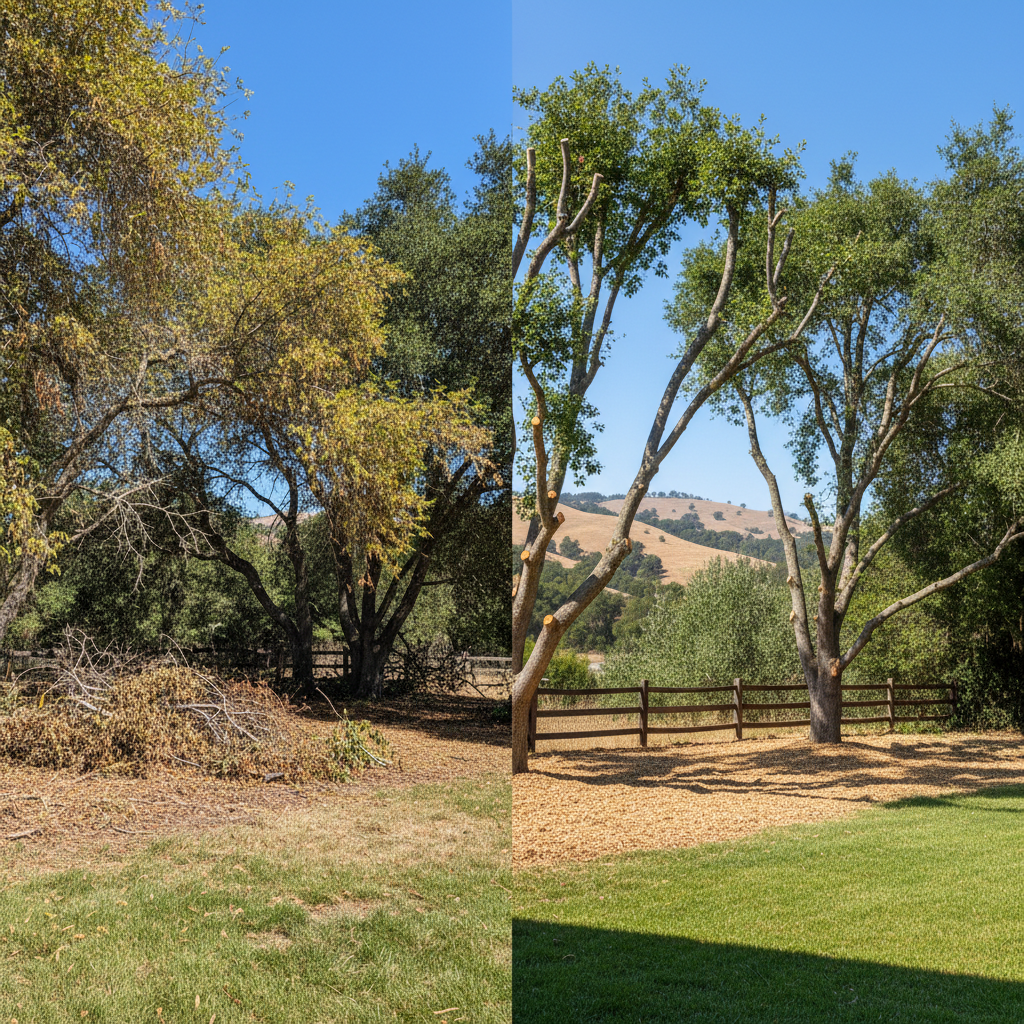
Should you trim your trees regularly, or just wait until a branch looks bad or causes an issue? That’s a question I hear a lot from folks right here in Napa, and it’s a good one. Generally, homeowners approach tree trimming in one of two ways: preventative care or reactive care. Let's dig into what each means for your trees and, honestly, for your wallet.
What's the Difference?
Preventative tree trimming is all about getting ahead of problems. You're setting up regular maintenance, usually every one to three years, depending on the tree species, how old it is, and where it's located. This kind of trimming focuses on getting rid of small, weak, or crossing branches before they grow into big, dangerous ones. Think of it like going to the dentist for regular cleanings instead of waiting for a cavity to turn into a full-blown root canal.
Reactive tree trimming, on the other hand, is pretty much what it sounds like. You're responding to a problem that's already popped up. Maybe a branch is dead, scraping against your roof, or it snapped off in a storm. You call us when something's gone wrong and needs immediate attention. Often, it's an emergency situation, or at least something that can't wait.
Cost: Upfront vs. Unexpected
When we talk about cost, this is where many people initially lean towards reactive care. They figure, 'Why pay for something if nothing's wrong?' But that's a pretty short-sighted way to look at it, and I'll tell you why.
- Preventative Care: You're paying smaller, more predictable amounts over time. A regular maintenance trim is usually less intensive, meaning it takes less time and doesn't always need specialized equipment. You can budget for it, and it typically costs less per visit than a big corrective job. Consider it an investment in your property's long-term health and safety, really.
- Reactive Care: These costs are often much higher and completely out of the blue. A large, dead branch that's about to fall on your garage? That's an emergency. A tree that's already split down the middle in a windstorm? That calls for a hazardous removal. Emergency services, special equipment for dangerous removals, and the potential for property damage repairs can quickly add up to a much bigger bill than a few routine trims. And if you live in an older neighborhood like Coombsville, with those gorgeous mature oaks and redwoods, a reactive approach can get incredibly risky and expensive if a big limb gives out.
Durability & Tree Health
This is where preventative care truly shines. Healthy trees are durable trees. When we do preventative trimming, we're:
- Improving structure: Taking out weak or poorly attached branches helps the tree grow a stronger, more resilient structure. This makes it less likely to get seriously damaged in high winds or during our occasional heavy winter rains.
- Enhancing health: We're removing dead, diseased, or insect-infested branches before the problem spreads to the rest of the tree. This helps the tree put its energy into healthy growth, making it more vigorous and resistant to future issues.
- Reducing stress: Proper, regular pruning minimizes how much live tissue we remove at once, which is less stressful for the tree. Reactive trimming often means taking out large, healthy limbs just to fix a problem, and that can stress the tree, making it more vulnerable.
Reactive care, by its very nature, means the tree has already had some kind of setback. While we can often fix the damage, the tree might be permanently weakened or more likely to face future problems.
Maintenance & Appearance
You want your property to look good, right? And you probably don't want to be constantly worrying about your trees.
- Preventative Care: This approach keeps your trees looking their best, all year long. We can shape them nicely, make sure they're not overgrowing power lines or blocking your view, and keep a balanced canopy. It also means less debris falling in your yard and gutters because weak branches are removed before they break. It’s a smart way to boost your curb appeal.
- Reactive Care: When you're reacting to a problem, the main focus is on safety and damage control, not necessarily how pretty it looks. A large branch removed in an emergency might leave an awkward gap in the canopy that takes years to fill in. You might also find yourself dealing with more fallen branches and debris between service calls, which is no fun.
My Recommendation for Napa Homeowners
Look, I've been doing this a long time, and I've seen just about everything. My clear recommendation for homeowners here in Napa is to prioritize preventative tree care. It's simply better for your trees, better for your property, and honestly, better for your peace of mind.
Our climate here in Napa, with its dry summers and those occasional intense winter storms, really puts stress on trees. Preventative trimming helps them handle these conditions. You'll end up with healthier, safer, and more beautiful trees, and you'll save money in the long run by avoiding those costly emergencies. Plus, you won't have to worry about a sudden branch falling on your patio during a dinner party – who needs that?
Think of it as an essential part of home maintenance, just like getting your roof inspected or your HVAC serviced. If you're not sure where to start, give us a call at Skyline Tree Solutions. We can assess your trees and help you set up a smart, preventative maintenance plan that fits your budget and keeps your property safe and looking great.