Do I even need a permit to take down a tree in Napa?
This is probably the most common question I get, and it's a good one because the answer isn't always straightforward. In Napa, whether you need a permit depends on a few things: the tree's size, its species, and where it's located on your property. Generally, if it's a significant tree — meaning it's over a certain diameter (often 6 inches or more at chest height) — or if it's considered a 'heritage' or 'protected' tree, you'll absolutely need a permit from the City of Napa or Napa County, depending on your exact address. They're trying to preserve our urban canopy, which I get. Things like oaks, especially our native Valley Oaks, are often protected. If it's a small, ornamental tree in your backyard that's clearly not a protected species, you might be in the clear. But here's my advice: if you're even a little unsure, call the city planning department or the county conservation office. It's way better to ask first than to get hit with a fine later. We can help you navigate this process too, if you hire us for the job.
What's the deal with stump grinding versus just leaving the stump?
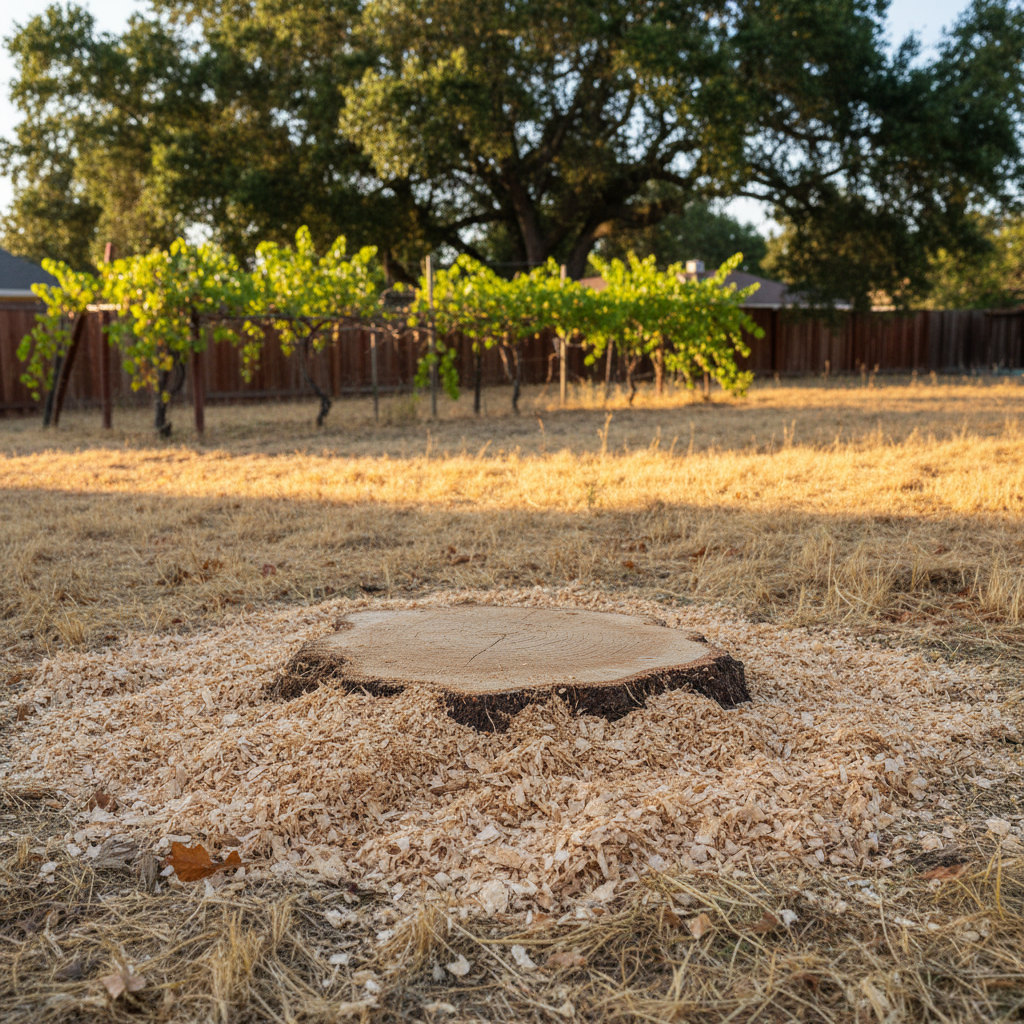
Okay, so you've got the tree down, now what about that stump? You've got two main options: leave it or grind it. Leaving it is cheaper upfront, obviously. Some folks like to turn them into planters or garden features, which can be pretty cool. But here's what you're signing up for: that stump is going to slowly rot, and during that process, it can attract pests like termites, ants, and even some fungal growth that you don't want spreading to your house or other healthy trees. It's also a tripping hazard and can be a pain to mow around. Grinding, on the other hand, gets rid of most of the stump down below ground level. We'll grind it into wood chips, which you can use as mulch or we can haul away. It eliminates the pest problem, makes your yard look tidier, and opens up that space for new landscaping or grass. It's an extra cost, but for most homeowners, it's worth it for the long-term benefits and peace of mind. Plus, trying to dig out a large stump yourself in our rocky Napa soils? Good luck with that. It's a back-breaking job.
How much does tree removal actually cost?
This is the million-dollar question, isn't it? And honestly, there's no single answer because every tree and every situation is different. When we give you a quote, we're looking at a bunch of factors. The size of the tree is a big one — a small ornamental tree is a lot less work than a massive old redwood. Its location matters too; is it easy to access with our equipment, or is it squeezed between your house and your neighbor's fence, requiring intricate rigging? Are there power lines nearby? The tree's condition also plays a role; a dead or diseased tree can be more hazardous to remove. And then there's the cleanup: do you want us to haul away all the wood and debris, or are you keeping some for firewood or mulch? We always come out and give you a free, no-obligation estimate so you know exactly what you're looking at. Don't go with the cheapest guy who just gives you a price over the phone without seeing the tree. You'll often regret it.
Can I save money by doing some of the work myself?
I get it, everyone wants to save a buck. And yes, in some very specific cases, you might be able to pitch in. For example, if you've got a small tree and we're just dropping it, you might be able to handle some of the brush cleanup or hauling away smaller branches yourself. But for the actual cutting and bringing down of a tree, especially anything of significant size, I strongly advise against it. Tree removal is dangerous work. We've got specialized equipment, training, and insurance for a reason. One wrong cut, one unexpected branch fall, and you're looking at serious injury, property damage, or worse. Your homeowner's insurance might not even cover you if you're doing professional-level tree work yourself and something goes wrong. It's just not worth the risk. Let Skyline Tree Solutions handle the dangerous stuff; we're professionals, and we're fully insured.
What's the best time of year for tree removal?
For most removals, we can do them pretty much any time of year. However, there are a few considerations. During the dormant season, typically late fall through early spring, trees have less foliage, which can sometimes make the job a bit easier and cleaner. There's also less impact on surrounding plants. But if you've got a hazardous tree, like one that's leaning dangerously after a winter storm or showing signs of sudden oak death, you don't wait for a specific season; you get it removed immediately. The main thing that affects timing for us is the weather. We can't safely operate in high winds or heavy rain, so sometimes we have to reschedule. But if you need a tree gone, we'll work with you to find the safest and most efficient time.
What happens to the wood after you remove the tree?
Good question! When we remove a tree, we typically cut it into manageable sections. What happens next is up to you. Many of our clients in Napa like to keep some of the larger pieces for firewood. If you've got a wood-burning stove or a fire pit, it's a great way to get some free fuel. We can leave it stacked for you. Smaller branches and brush are usually chipped on-site. These wood chips are fantastic for landscaping, pathways, or as mulch around your other plants – they help retain moisture and suppress weeds. If you don't want any of it, no problem, we'll haul everything away and dispose of it properly. We try to be as environmentally responsible as possible, often taking larger logs to facilities that can mill them or use them for other purposes.