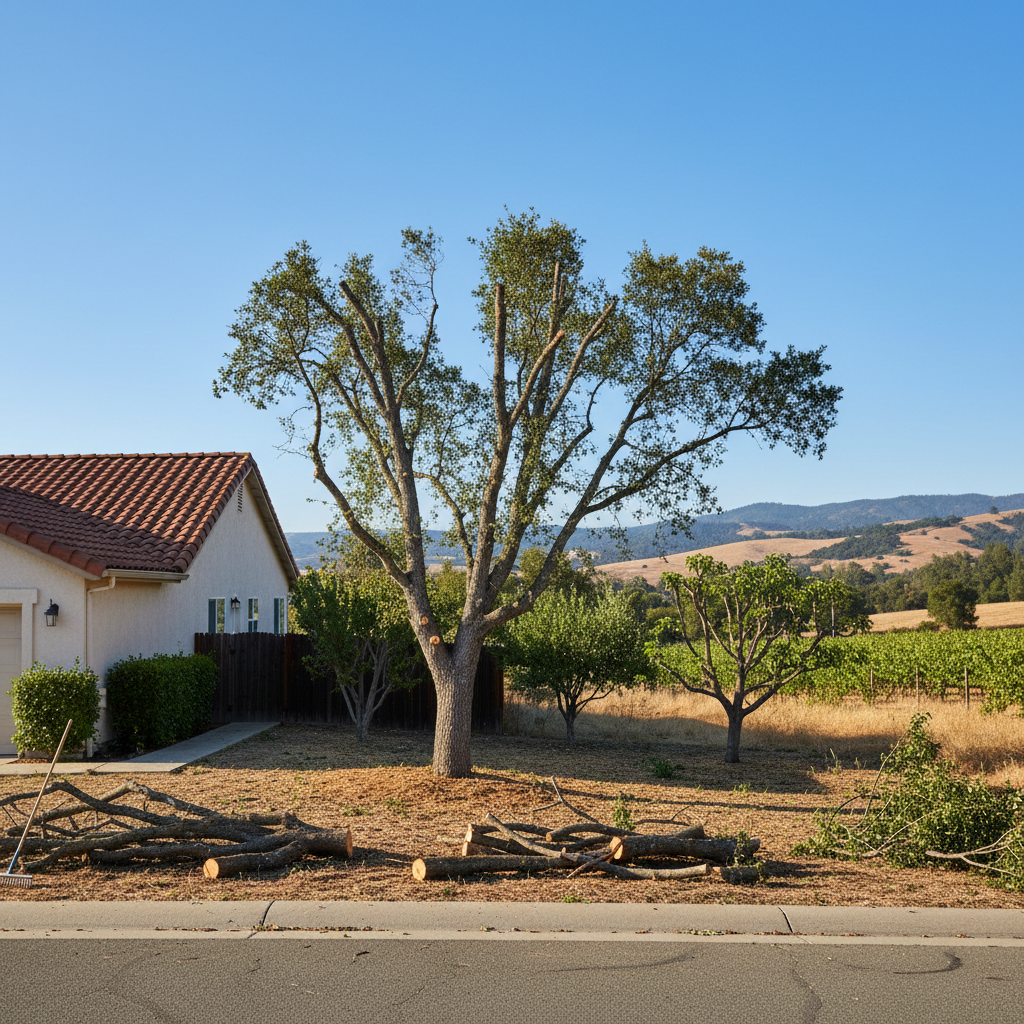
Let's talk about money, specifically what you're looking at when it comes to keeping your trees healthy here in Napa. Nobody likes surprises on a bill, especially when it's about something as important as your property's trees. I've been doing this for a while, and I've seen a lot of folks get confused or even ripped off because they don't know what to expect. So, I'm going to lay out what really affects the price of tree health and care, give you some typical ranges, and tell you how to make sure you're getting a fair shake.
What Makes Tree Care Prices Go Up or Down?
You'd think it'd be simple, right? A tree is a tree. But there's a lot more to it than that. Here are the big factors that influence what you'll pay:
- Tree Size and Type: This is probably the most obvious one. A small, young ornamental plum tree is a lot easier and quicker to work on than a massive, mature Valley Oak that's been standing for decades. Taller trees need more specialized equipment – think bucket trucks or even cranes – and more time. Some trees, like certain conifers, also have denser canopies or more complex growth patterns that require more skilled pruning.
- Tree Condition: Is the tree healthy and just needs a routine trim? Or is it stressed, diseased, or infested with pests? Treating a sick tree often involves more than just pruning; it might need specific treatments, soil amendments, or even a more delicate approach to avoid further stress. A tree that's already partially dead or has structural issues is also riskier and takes more care to work on safely.
- Accessibility: Can we get our equipment right up to the tree? Or is it tucked away in a tight backyard, over a fence, or on a steep slope? Easy access means less time and labor. If we have to haul equipment by hand, climb extensively, or work around obstacles like power lines, sheds, or delicate landscaping, that's going to add to the cost. Working near your neighbor's prize-winning rose garden or a newly installed patio also means we have to be extra careful, which takes more time.
- Scope of Work: Are we just doing a light aesthetic prune, or a major structural reduction? Are we treating for a specific pest, or doing a full tree health assessment with soil testing? More extensive work, naturally, costs more. Removing deadwood is usually less involved than a full crown reduction or thinning.
- Debris Removal: What do you want to do with the branches and wood? Most quotes include chipping and hauling away all debris. If you want to keep the wood for firewood or mulch, some companies might offer a slight discount, but usually, the cost of chipping and hauling is built into the service.
- Emergency vs. Scheduled: If you've got a tree limb threatening your roof in the middle of a winter storm – like the ones we get here sometimes, especially when the ground is saturated and winds pick up – that's an emergency. Emergency services cost more, often significantly more, because we have to drop everything and respond immediately, sometimes in hazardous conditions. Scheduled work is always more cost-effective.
Typical Cost Ranges for Tree Health & Care in Napa
Alright, let's get down to some numbers. Keep in mind these are averages, and your specific situation might be higher or lower. These estimates generally include labor, equipment, and debris removal.
- Basic Pruning (Small to Medium Trees, 15-30 ft tall): For a routine trim on a healthy, accessible tree, you're usually looking at something in the range of $300 - $700 per tree. This could be for a young ornamental, a fruit tree, or a smaller shade tree.
- Pruning (Large Trees, 30-60 ft tall): For bigger shade trees, like mature sycamores or oaks, where we need more equipment and time, expect to pay $700 - $1,500 per tree. If it's a really complex job, or the tree is exceptionally large or difficult to access, it could go higher.
- Deep Root Fertilization/Soil Amendments: This is a great preventative measure, especially for trees in compacted urban soils or those showing signs of stress. Prices typically range from $150 - $400 per tree, depending on the tree's size and the specific treatment needed.
- Pest and Disease Treatment (Topical or Systemic): This varies wildly based on the pest, the size of the tree, and the type of treatment. A single treatment might be $200 - $600, but often requires follow-up applications. For something like oak worm control on a large tree, it could be on the higher end.
- Tree Health Assessment/Consultation: If you're not sure what's going on with your tree and just need an expert to look at it, a consultation without immediate work usually runs $75 - $150. This often gets credited back if you proceed with services.
- Cabling/Bracing: For trees with weak limbs or split trunks that need structural support, cabling can save them. This is a more specialized service and usually costs $500 - $1,500 per tree, depending on the number of cables and the tree's size.
Remember, these are ballpark figures. A reputable company like Skyline Tree Solutions will always give you a detailed, written quote tailored to your specific situation.
What Should Be Included in Your Quote?
When you get a quote, don't just look at the bottom line. Make sure it clearly spells out:
- Specific Services: Exactly what work will be performed (e.g.,